
Y板金図面一式を製作工場に送り、CNCタレットパンチングの見積もりを受け取ります。価格は妥当に見えるかもしれませんし、驚くほど高いかもしれません。いずれにせよ、知りたいのは その数字の裏にあるもの. です。サプライヤーにコストの内訳を求めると、返ってくる答えは多くの場合、 機械時間、金型費用、段取り費用 が混在しており、図面のどの項目にもきれいに対応しないものです。.
これはよくある状況です。 OEM調達チームとエンジニア がタレットパンチング部品を初めて調達するとき—あるいは新しいサプライヤーで5回目に調達するときにも。. CNCタレットパンチングのコストは単一の変数ではありません。. それは、お客様の 部品形状、材料、バッチサイズ、設計上の選択. に応じて異なる相互作用をする複数の要因の複合体です。これらの要因を理解することが、評価できる見積もりと、受け入れるか拒否するかしかできない見積もりを分けます。.
本ガイドでは、CNCタレットパンチングのコスト構造を five dimensions, に分解し、設計上の決定がそれぞれにどのように影響するかを説明し、発注を確定する前に見積もりを検討するためのフレームワークを提供します。.
タレットパンチング部品のコストを構成するもの
タレットパンチングの見積もりは、レートカードから引き出された単一の数字ではありません。. それは複数のコスト構成要素の合計, であり、それぞれが部品と注文の異なる側面によって左右されます。見積もりが異常に高い—あるいは異常に低い—場合、その説明はほとんどの場合、これら5つの次元のうち1つ以上にあります。.
機械時間:ヒット数の方程式
タレットパンチングで最も直接的なコスト要因は ヒット数—1つの部品を完成させるのに必要なパンチストロークの総数です。タレットプレスは分単位で課金され、 すべてのヒットがサイクルタイムを増加させます.
A simple panel with four mounting holes might require 4 hits. A ventilation grid with 200個の同一の丸穴がある場合は200ヒットが必要です. 。工場が専用工具を持っていない複雑な切り抜きは、数十の重なり合う小さなパンチを使って「ニブリング」で加工する必要があります—時には 単一の特徴に対して50~100回の打ち抜き.
ヒット数とコストの関係は線形です。ヒット数が2倍になれば、機械時間もほぼ2倍になります。. これが、密集した穿孔パターンや多くの独自フィーチャーを持つ部品が、いくつかの標準穴を持つ部品よりも大幅に高い部品あたりコストになる理由です。.
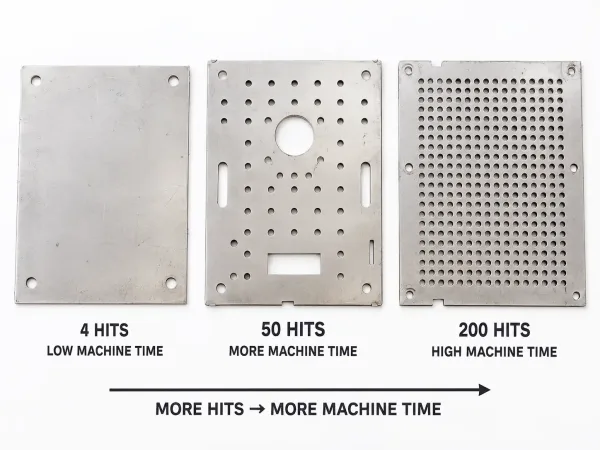
パンチヒット数が増えると、機械時間と部品コストが増加します。.
金型:標準ステーション vs. カスタムパンチ
CNCタレットプレスは、パンチ・ダイセットの回転マガジンを保持しています—通常 30~50ステーション. 。丸穴、角スロット、長円形切り抜きなどの標準形状は、ほとんどの製作工場がすでに所有している工具を使用します。. これらの標準工具は、見積もりに金型費用をゼロまたは最小限しか追加しません。.
カスタム金型 は話が別です。部品に専用コネクタ切り抜き、D-subプロファイル、または任意の非標準形状が必要な場合、工場はカスタムパンチ・ダイセットを発注する必要があります。カスタム金型の費用は通常 $300~$1,000以上 で、複雑さと材料によって異なります。これは 初回注文時の一時費用ですが、リードタイムが追加され(多くの場合 金型製作に2~4週間)、見積もりに別項目として表示されます。.
重要な違い:標準金型は工場にとって埋没費用であり、見積もりに表示されることはほとんどありません。カスタム金型はプロジェクト固有の投資であり、お客様が直接支払います。.
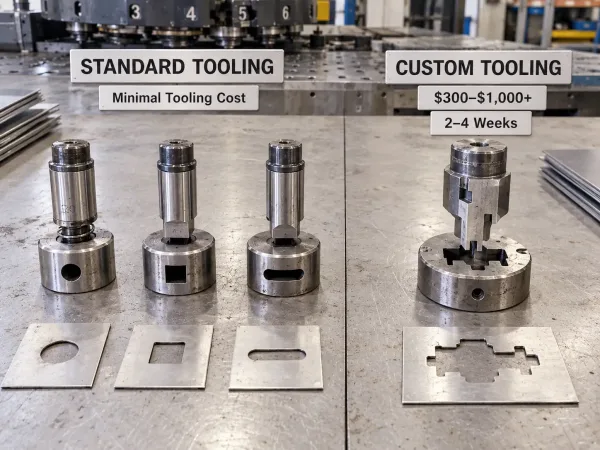
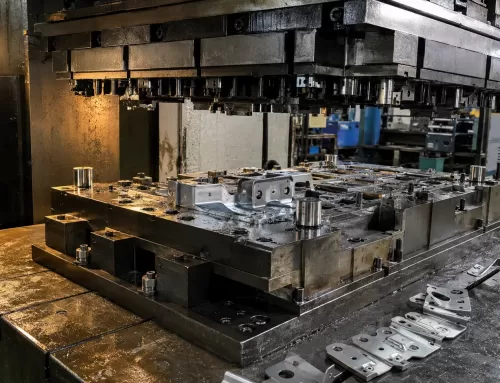
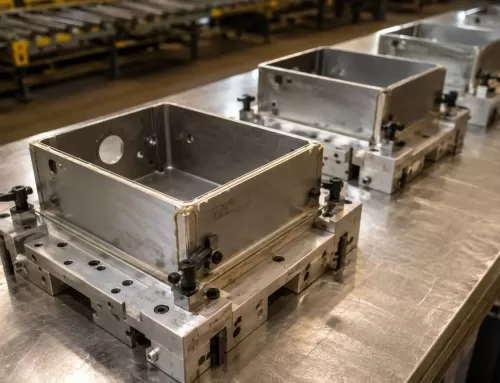
標準工具は通常、金型費用を回避できますが、カスタムプロファイルには専用のパンチ・ダイセットが必要です。.
段取りと切り替え
生産開始前に、オペレーターは正しい工具をタレットステーションに装着し、板材を位置合わせし、最初の部品を検証する必要があります。. この段取り時間はお客様に請求されます。.
段取り時間は、部品に必要な 固有の工具の数に比例して増加します. 。3つの異なる穴径を持つ部品では、3つの工具ステーションを装填する必要があります。12の異なる穴径、2つのスロット幅、およびカスタム切り欠きを持つ部品では、15のステーションが必要となり、タレットがそれらすべてを同時に保持するのに十分なステーションを持っていない場合は、途中で工具交換が必要になる可能性もあります。.
設計において穴径を統合すること—例えば、5.5 mmと6.5 mmを混在させる代わりに単一の6 mm取付穴を使用する—は、段取り時間とコストを直接削減します.
材料と板厚
材料の選定と 板金の板厚 は、2つのメカニズムを通じてパンチングコストに影響を与えます: トン数要件 および 工具摩耗率.
厚い板材はより高い打ち抜き力を必要とします。. 3 mmの軟鋼パネルは、6 mmのステンレス鋼パネルよりも大幅に少ないトン数で済みます。トン数が高くなると、パンチチップとタレットアセンブリへの応力が増大し、工具摩耗が加速してメンテナンス頻度が増加します。.
材料の硬度はこの影響をさらに増幅させます。. 例えば、ステンレス鋼は同じ板厚の軟鋼と比較して、約20~30%以上のせん断力を必要とします。. 硬い材料はまた、パンチとダイの間でかじり(凝着摩耗)が発生するリスクを高め、工具寿命を短縮し、より頻繁な再研削が必要になる場合があります。.
実際的な影響: 異なる材料で見た目が似ている部品は、大幅に異なるコストプロファイルを生み出す可能性があります, 、たとえ形状が同一であっても。.
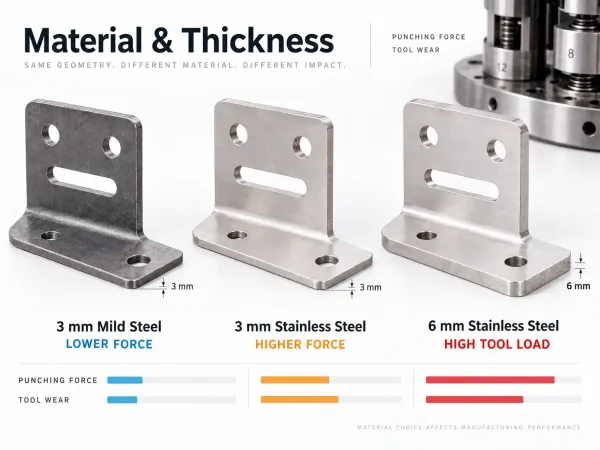
厚く硬い材料は、より多くの打ち抜き力を必要とし、工具摩耗を増加させます。.
二次加工
タレットパンチングは、上部に滑らかなロールオーバー、下部に鋭い破断面を持つ機械的せん断エッジを形成します。多くの用途では、このエッジ状態はそのまま許容されます。その他の用途では、, コストを増加させる後工程が発生します.
金属のバリ取り は最も一般的な二次加工です。小さな穴、狭い間隔、または外観面の要件がある部品は、曲げ、溶接、または組立に進む前に、機械的または手動のバリ取りが必要になることがよくあります。.
平坦度の修正 は、高密度の穿孔パターンの後に必要になる場合があります。数百回のパンチストロークは局所的な変形を引き起こし、特に薄いゲージにおいて部品の平坦度を損なう可能性があります。.
リーミングまたは二次機械加工 は、タレットパンチングが確実に保持できる公差よりも厳しい公差の穴に必要になる場合があります(通常±0.1 mm).
これらの各工程は、部品ごとに労働時間を追加します。. 設計変更によって二次加工を回避できる場合、それらはコスト削減の機会となります。.
部品設計の決定がパンチングコストをどのように変えるか
図面のすべての特徴は、製作工場にコストシグナルを伝えます。. 一部の特徴は打ち抜きが安価です。その他の特徴は、見積もりを見るまで明らかにならない方法でコストを押し上げます。これらのシグナルを理解することで、エンジニアと調達チームは設計が確定する前に情報に基づいたトレードオフを行えます。.
非標準の穴プロファイルとカスタム工具
標準の丸穴、角穴、長穴は、工場がすでにタレットに持っている工具を使用します。. これらの特徴に対する工具費は実質的にゼロです。.
設計が非標準プロファイル—D-subコネクタの切り欠き、専用の取付スロット、またはカスタム換気形状—を指定した瞬間に、工場は専用工具を発注する必要があります。これにより three costsが発生します:初期工具費(300–1,000以上)、工具製作のリードタイム(2~4週間)、および長期生産における工具交換のライフサイクルコスト。.
可能な場合は、, 切り欠き形状を標準工具プロファイルに合わせてください. 。標準の長円工具に合う丸隅付き長方形スロットは、工具費がかかりません。同じスロットでも鋭い内隅がある場合は、 カスタム工具またはニブリング—いずれもコストを増加させます.
材料厚さに対する小径穴の直径
広く受け入れられているエンジニアリングガイドラインは、 最小打ち抜き穴径は材料厚さを下回ってはならないというものである. 。穴径がこの閾値に近づくか下回ると、パンチのたわみが増大し、工具摩耗が加速し、バリ発生のリスクが高まる。.
小径穴には より厳しいパンチ・ダイクリアランス、より低速なストローク速度、およびより頻繁な工具検査が必要であり—これらはすべてサイクルタイムと部品単価を増加させる。大量生産では、アンダーサイズ穴に対して厳しい公差を維持することによる累積的影響は相当なものになり得る。.
小径穴が構造上必要な場合、 二次的なドリル加工やリーマ加工の方がコスト効率が高いかどうかを検討すべきである タレットパンチをその信頼できる範囲を超えて使用するよりも。.
高密度の穿孔パターン
穿孔パネル—通気グリッド、吸音スクリーン、フィルターマウント—は 部品あたり数百から数千のパンチストロークを必要とする場合がある. 。各打撃はサイクルタイムを増加させ、その累積的影響は打撃数に比例して直線的に拡大する。.
高密度パターンは工具摩耗も加速させる。繰り返しの高衝撃負荷はパンチエッジにマイクロチッピングを引き起こし、生産バッチ全体を通じてバリ高さが漸進的に増大する。これはつまり 工具を生産途中で再研削しない限り、最初の1,000個は最後の1,000個よりもきれいなエッジを持つ可能性があるということである.
ピッチ(穴間の間隔)を広げるか、穿孔数を減らすことで 部品の機能要件を損なうことなくコストを下げられることが多い—特に気流、軽量化、または外観が主な目的である用途では。.
エッジや曲げ線に近い形状
打ち抜き形状がエッジに近すぎる位置にある場合、周囲の材料が打ち抜き力を十分に抵抗できない。これにより エッジ変形、引き裂き、ロールオーバーの増加、および平坦度の喪失が発生する可能性がある. 。一般的な設計ガイドラインは、 エッジから穴中心まで少なくとも材料厚さ1つ分の最小距離を維持することである.
曲げ線への近接はさらなる複雑さをもたらす。成形前に穴を打ち抜く場合、曲げ中の材料伸長により穴位置がずれる可能性がある。成形後に打ち抜く場合は、, 追加の治具固定が必要となり、サイクルタイムとコストが増加する.
位置が不適切な形状は、しばしば 高いスクラップ率、検査負荷の増大、および手直しをもたらす—これらはすべて最終コストを初期見積もりの予測を超えて膨らませる。.
数量とコスト — タレットパンチが経済的に合理的となる領域
タレットパンチにおける受注数量と部品単価の関係は非線形である。. この関係を理解することで、調達チームはタレットパンチがプロジェクトに適したプロセスかどうか—そしてどの数量で最もコスト効率の高い選択肢になるかを判断できる。.
小ロット生産で部品単価が高くなる理由
小ロット受注(通常100~200個未満), 小ロットのNREおよび工具費—セットアップとプログラミングを含む—はごく少数の部品に配分される。. $600のカスタム工具費を50個で割ると、1個あたり$12が加算される。同じ費用を5,000個で割ると、1個あたり$0.12が加算される。.
セットアップ時間も同じ論理に従う。セットアップに45分かかり、生産に1個あたり30秒かかる場合、50個の受注ではセットアップと実際の打ち抜きにほぼ同じ時間を費やすことになる。. 5,000個の受注では、そのセットアップをはるかに大きな基数で償却できる。.
これが、試作や小ロット受注のタレットパンチ見積もりが不相応に高く見えることが多い理由である。. 部品単価が膨らんでいるのではない—単に固定費のより大きな割合を負担しているだけである。.
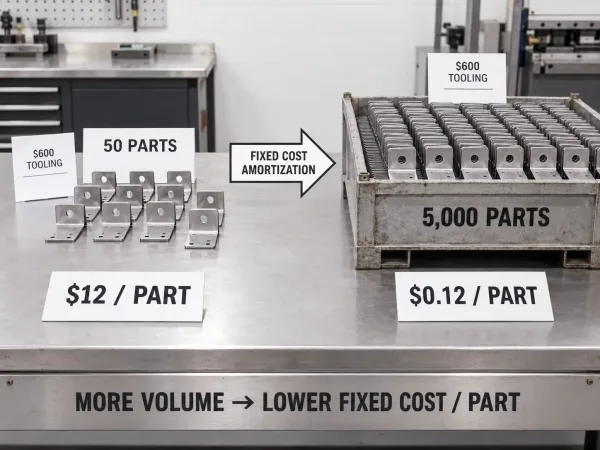
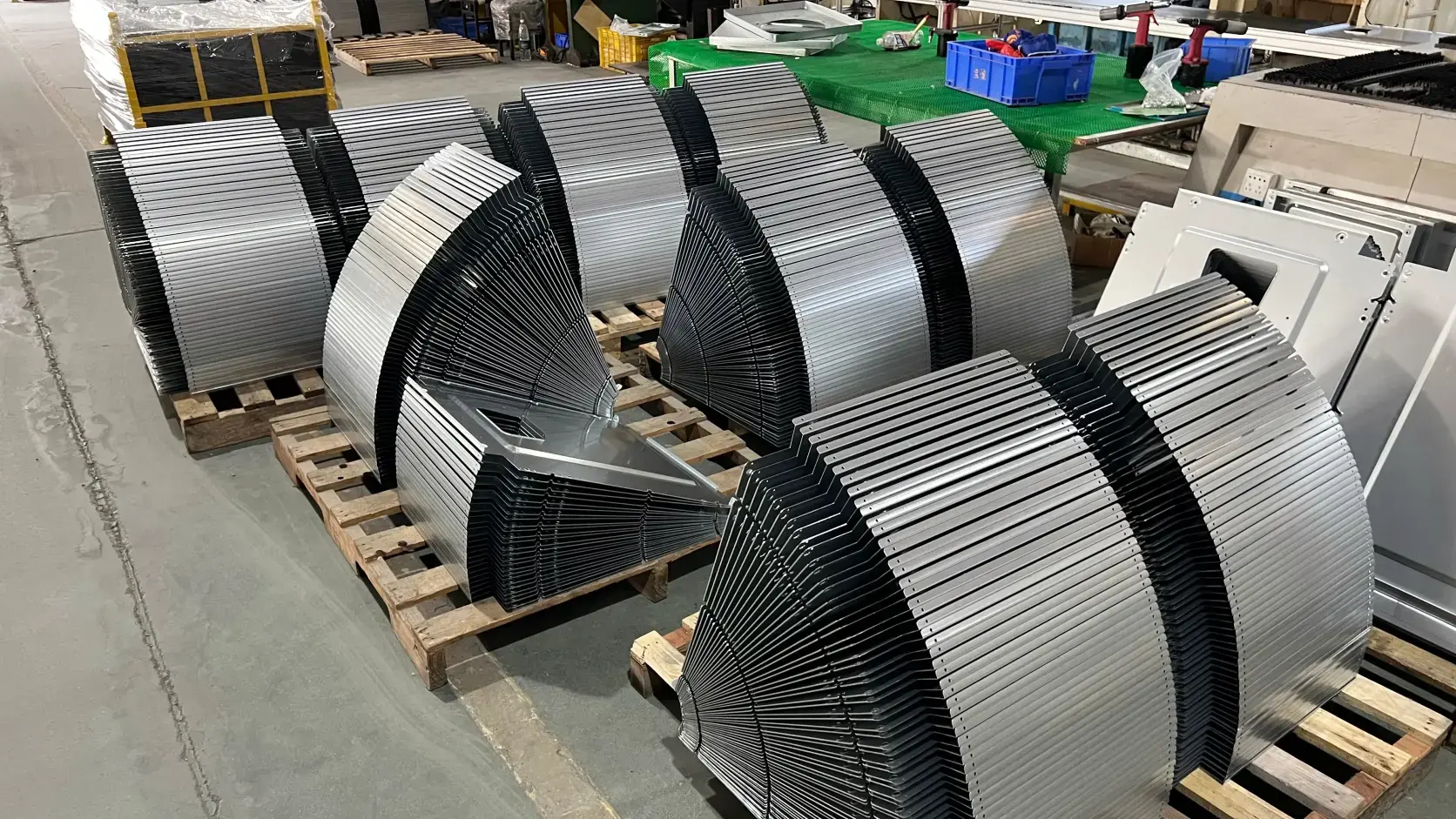
生産数量が増えると、固定工具費とセットアップ費がより多くの部品に分散される。.
クロスオーバーポイント:パンチが他のプロセスを上回る時
タレットパンチは数量が増えるにつれてコスト競争力が高まり、特に繰り返し標準形状を持つ部品に適している。一般的なパターン:
- 500個未満:レーザー切断が有利なことが多い。特に複雑な形状の場合、工具投資がゼロでセットアップも最小限で済むためである。.
- 500~5,000個:クロスオーバーゾーン。多くの標準穴、ルーバー、または成形形状を持つ部品はパンチ有利になり始める。複雑な輪郭を持つ部品は依然としてレーザーが有利である。.
- 5,000個以上: Turret punching typically delivers the lowest per-part cost for parts with standard features, once tooling is amortized and the fast cycle time dominates the cost equation.
These thresholds shift based on part geometry. A panel with 200 identical round holes reaches the crossover point much earlier than a bracket with 4 custom cutouts.
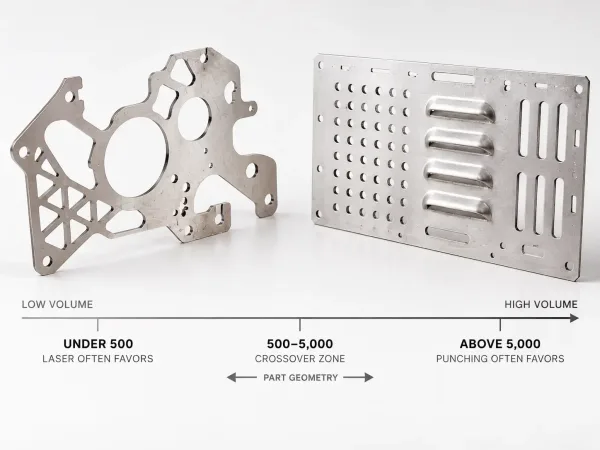
Laser cutting often favors lower volumes, while turret punching becomes more competitive as volume increases.
OEM Project Characteristics That Favor Punching
OEM projects often have specific characteristics that align well with turret punching economics:
Stable designs. OEM products typically go through a defined design validation phase before production. Once the design is frozen, the tooling investment is justified because the same part will be ordered repeatedly over the product lifecycle.
Predictable volumes. OEM procurement often involves scheduled releases—monthly or quarterly orders of the same part. This predictability allows the supplier to amortize tooling and plan production efficiently, which can translate into lower per-part pricing.
Standardized features. OEM enclosures, panels, and brackets often use standardized connector cutouts, mounting holes, and ventilation patterns that match existing turret tool libraries. This minimizes custom tooling charges.
Long-term supplier relationships. OEM buyers who commit to a supplier for the product lifecycle can negotiate tooling amortization, priority scheduling, and volume pricing that short-term or project-based buyers cannot.
Hidden Costs That Often Escape the Initial Quote
The line items on a turret punching quote cover the obvious costs: machine time, tooling, and setup. But several cost drivers do not appear as separate line items—they either hide inside the unit price or emerge after production begins. Awareness of these costs allows procurement teams to ask the right questions before approving a quote.
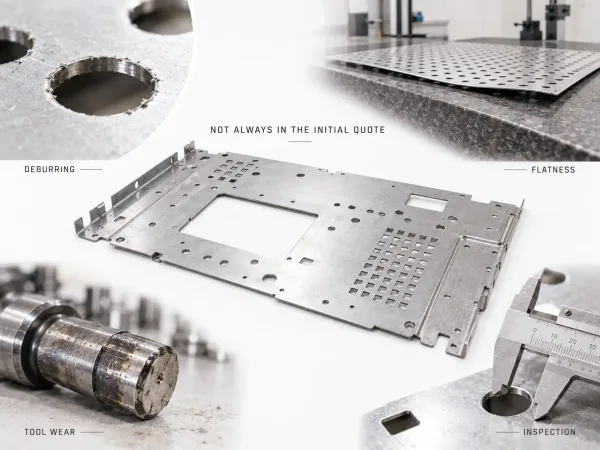
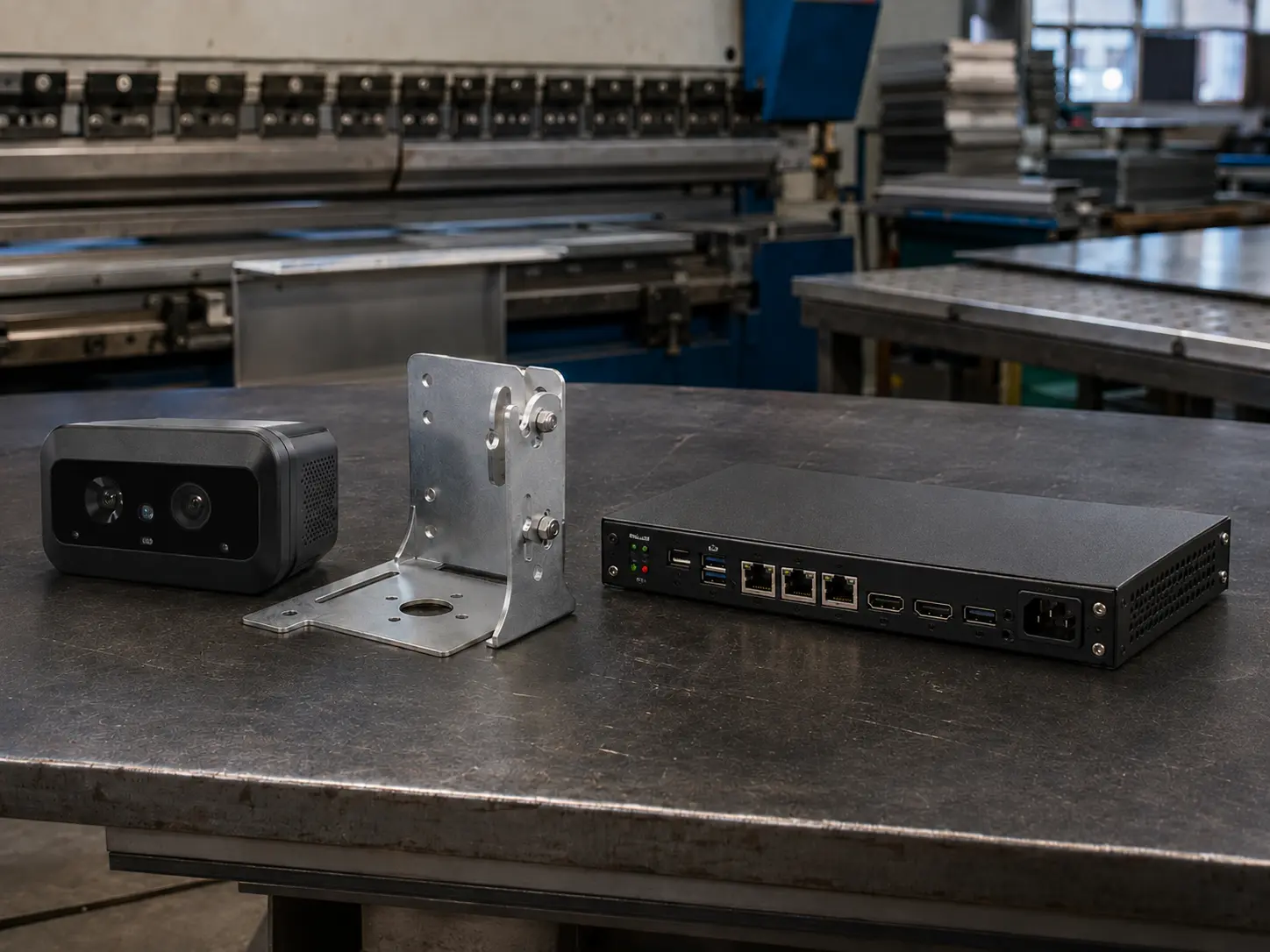
Secondary finishing, flatness correction, tool wear, and inspection can add cost after punching.
Deburring and Edge Finishing
Turret punching produces a sheared edge with a burr on one side. For many parts, this is acceptable. For parts that require clean edges—cosmetic panels, parts that interface with gaskets, or assemblies where burrs could damage wiring or seals—deburring is a necessary secondary operation.
Some suppliers include basic deburring in the unit price. Others list it as a separate charge. If your drawing does not specify an edge condition, the supplier may assume the as-punched edge is acceptable—and price accordingly. If deburring is later found to be necessary, it becomes an unplanned cost addition.
The fix: Specify edge requirements on the drawing. If a burr-free edge is required, state it explicitly. This allows the supplier to include the cost in the original quote rather than adding it later.
Flatness Correction After Dense Perforations
Parts with dense perforation patterns—particularly on thin gauge material—can lose flatness during punching. The cumulative effect of hundreds of localized deformations can bow or warp the sheet. If the downstream application requires flat parts (for example, panels that mount to a frame with a gasket seal), flatness correction through leveling or pressing may be necessary.
This cost is rarely included in the initial punching quote because it depends on the actual behavior of the part during production. It may surface as a quality hold, a rework charge, or a request for design modification.
Tool Regrinding and Replacement Over Production Runs
Custom punch tools wear over time. In a short production run (under 1,000 parts), tool wear is negligible. In a long production run (10,000+ parts), the punch edge degrades progressively, increasing burr height and potentially drifting hole dimensions out of tolerance.
Most fabrication shops regrind tools as part of their maintenance routine, and this cost is typically absorbed into the unit price. However, for high-volume runs with abrasive materials (stainless steel, galvanized steel), tool replacement may be necessary mid-run. If this is not accounted for in the original quote, it can result in a cost adjustment or a quality issue.
Inspection Rework for Tight-Tolerance Features
Standard CNC turret punching holds hole position tolerances of approximately ±0.1 mm. If your drawing specifies tighter tolerances—±0.05 mm or better—the shop may need to slow the stroke rate, use precision-ground tooling, or perform secondary machining on critical features.
Tight tolerances also increase inspection frequency. The shop may need to measure more features per part or use higher-precision instruments, both of which add time and cost. If the tolerance is tighter than what the process can reliably achieve, the rejection rate rises—and with it, the effective per-part cost.
How to Review a Turret Punching Quote — A Buyer’s Checklist
Receiving a quote is not the end of the procurement process—it is the beginning of the evaluation. A well-structured quote should allow you to understand where your money is going and whether the pricing reflects the actual requirements of your parts.
Five Line Items to Verify on Every Quote
- Tooling charges. Are they listed separately? If custom tooling is included, is the cost reasonable for the complexity of the profile? Are there standard tool alternatives that would eliminate this charge?
- Setup time. Is setup billed as a flat fee or amortized into the unit price? How does the setup charge compare to the number of unique tools your part requires?
- Secondary operations. Are deburring, flatness correction, or secondary machining listed as separate line items—or are they assumed to be included in the unit price? If they are not listed, ask whether they are needed.
- Material cost. Is material quoted as a separate line item, or is it embedded in the unit price? If separate, does the material grade and thickness match your drawing specification?
- Quantity breakpoints. Does the quote show pricing at multiple volume levels? If not, ask for a price at 2× and 5× the quoted quantity to understand how the per-part cost scales.
Questions to Ask When the Price Seems High
- How many hits does the part require, and what is driving that count?
- Are any features requiring custom tooling, and can they be redesigned to use standard tools?
- How many unique tool stations are needed, and is a mid-run tool change required?
- Are secondary operations included or excluded from the quoted unit price?
- Is the material specified on the drawing readily available, or does it require special ordering?
What a Transparent Quote Should Look Like
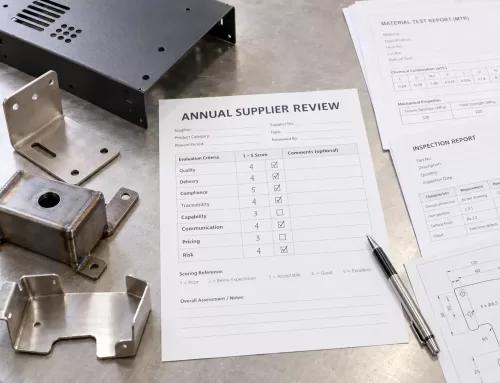
A well-structured quote separates fixed costs (tooling, NRE, setup) from variable costs (per-part machine time, material, finishing). It specifies the Incoterms, states the material grade and thickness, and lists any assumptions about edge condition, tolerance capability, and packaging.
If a quote arrives as a single lump sum with no breakdown, ask for a line-item version. A supplier who cannot or will not provide cost transparency on a turret punching quote may not be the right partner for a long-term OEM relationship.
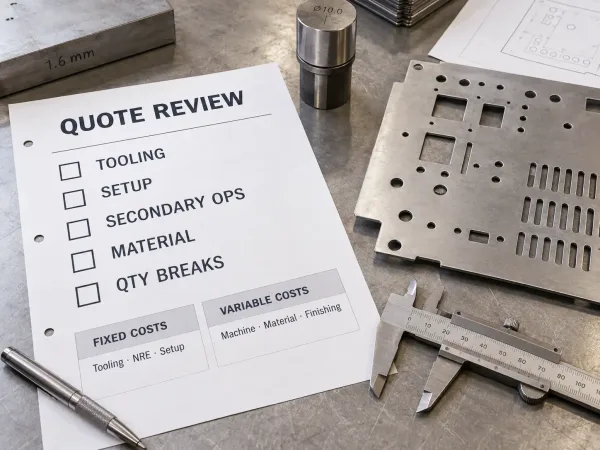
Five line items OEM buyers should verify when reviewing a turret punching quote.
Design Changes That Reduce Punching Cost Without Redefining the Part
Reducing punching cost does not require redesigning the part from scratch. Several targeted adjustments identified during a sheet metal DFM review can lower the quote without changing the part’s form, fit, or function.
Standardize Hole Sizes to Minimize Tool Changes
Every unique hole diameter, slot width, or cutout dimension requires a separate tool station in the turret. If your part uses 6 mm, 6.5 mm, and 7 mm mounting holes, that is 3 stations. Consolidating all mounting holes to a single 6 mm size reduces tool stations, shortens setup time, and lowers cost.
This principle applies across the entire part. Review all hole features and ask: can any of these be unified into a single standard size?
Match Cutout Geometry to Standard Tool Profiles
Before specifying a custom cutout shape, check whether a standard oblong, rectangular, or D-sub tool already covers the geometry. Many connector cutouts can be approximated by a standard rectangular slot with rounded corners—often at zero additional tooling cost.
If a custom shape is unavoidable, define the internal radii on the drawing. Sharp internal corners below the tool’s achievable radius force the shop to nibble the feature, increasing hit count and cycle time.
Adjust Perforation Spacing to Lower Hit Count
For perforated panels, reducing the number of holes—even marginally—has a direct impact on machine time. Increasing the pitch from 5 mm to 6 mm on a 500 mm × 500 mm panel can reduce the hit count by 30% or more, depending on the pattern geometry.
This trade-off should be evaluated against the functional requirement. For ventilation panels, the airflow impact of wider spacing may be negligible. For acoustic panels, the trade-off may be more significant.
Plan Punching in the Flat-Blank Stage
All punching should be completed on the flat sheet before any bending or forming operations. Returning a bent or welded part to the punch press requires additional fixturing, increases cycle complexity, and adds cost.
Design the part from the beginning with this sequence in mind: punch first, then bend, then weld. Hole locations, formed features, and relief cuts should all be planned for the flat-blank state.
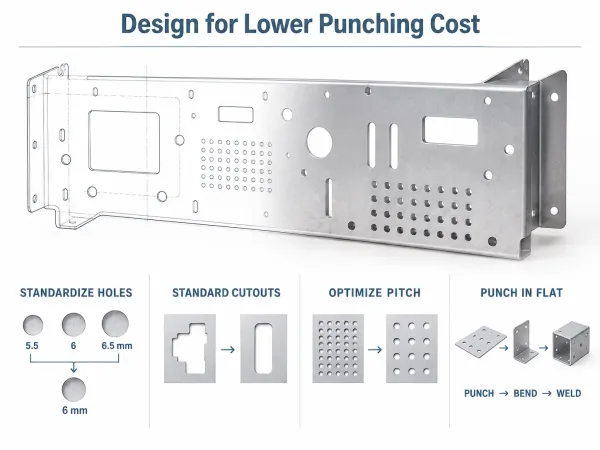
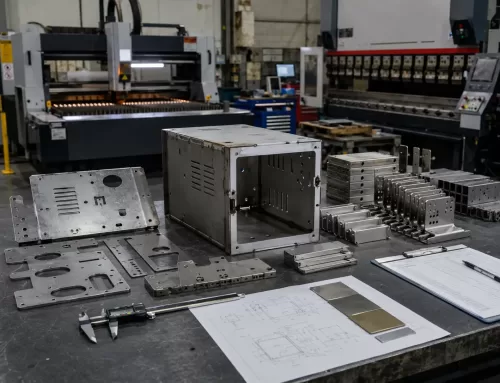
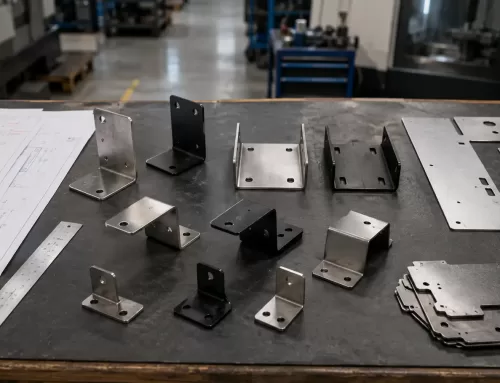
Standardized features and flat-blank punching can reduce tooling changes and machine time.
よくある質問
Need a DFM review on your turret-punched parts? Upload your drawings and our engineering team will identify cost drivers, flag potential tooling charges, and suggest design adjustments that can reduce your per-part cost—typically within 24 hours.