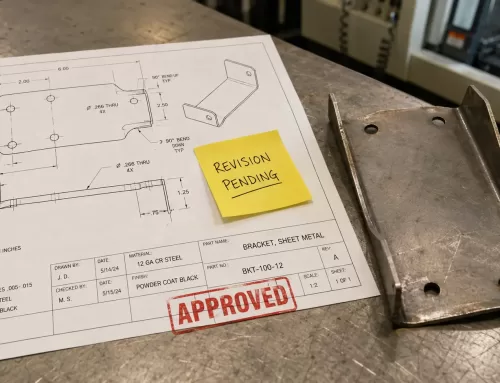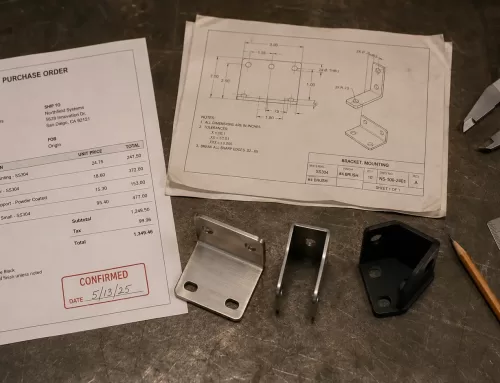

A non-standard aluminum grade can push your sheet metal delivery from 2週間から8週間. に延ばす可能性があります。カスタム厚み公差はさらに1週間を追加することがあります。ミルサーティフィケート要件は、書類が整うまで生産を停滞させる可能性があります。. これらはそれぞれ「特殊材料要件」であり、それぞれが異なるメカニズムを通じてリードタイムを延長します。.
カスタム板金部品の材料を指定する場合、, 要件を「特殊」にするものは何か — そしてそれが調達にとってなぜ重要か — を理解することが、正確なプロジェクト計画への第一歩です。.
特殊材料要件とは何か?
特殊材料要件とは、ファブリケーターが通常在庫として保有する範囲、または標準的な流通チャネルを通じて調達できる範囲を超える材料仕様のことです。. 単に「材料を指定する」ことではありません。追加の調達努力、文書化、または検証を必要とする材料バリアントを指定することです。.
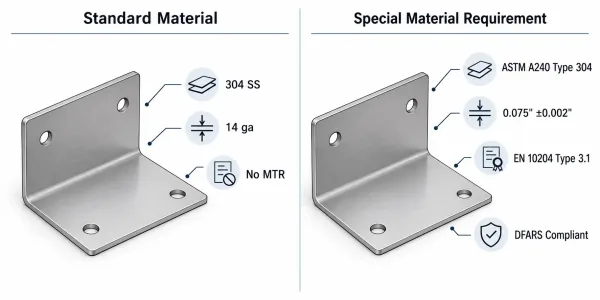
この図は、標準材料仕様(一般的なグレード、標準ゲージ)と特殊材料要件(非標準グレード、カスタム厚み、認証)を比較したものです。.
この区別は重要です。標準ゲージの304ステンレス鋼を指定することは、日常的な材料指定です。. 特定のASTM A240ミルサーティフィケーション、±0.002″公差のカスタム0.075″厚み、およびDFARSコンプライアンス声明を伴う304ステンレス鋼を指定すると、同じ材料が特殊要件に変わります。.
非標準グレードおよび合金
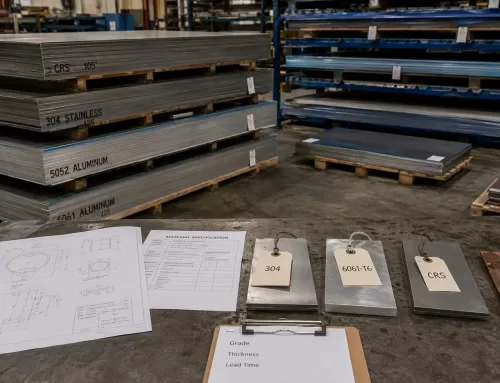
標準グレードとは、ファブリケーターが一般的なゲージで在庫として保有するものです — 304 and 316 stainless steel, 5052 and 6061 aluminum, A36 mild steel. 非標準グレードには、以下のような特殊合金が含まれます Inconel、Hastelloy、Monel、チタン合金(Ti-6Al-4V)、および17-4 PHや2205デュプレックスのようなあまり一般的でないステンレスグレード。. これらの材料はサプライヤープールが小さく、ミルリードタイムが長くなります。.
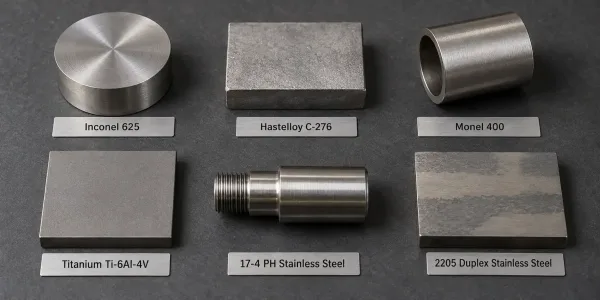
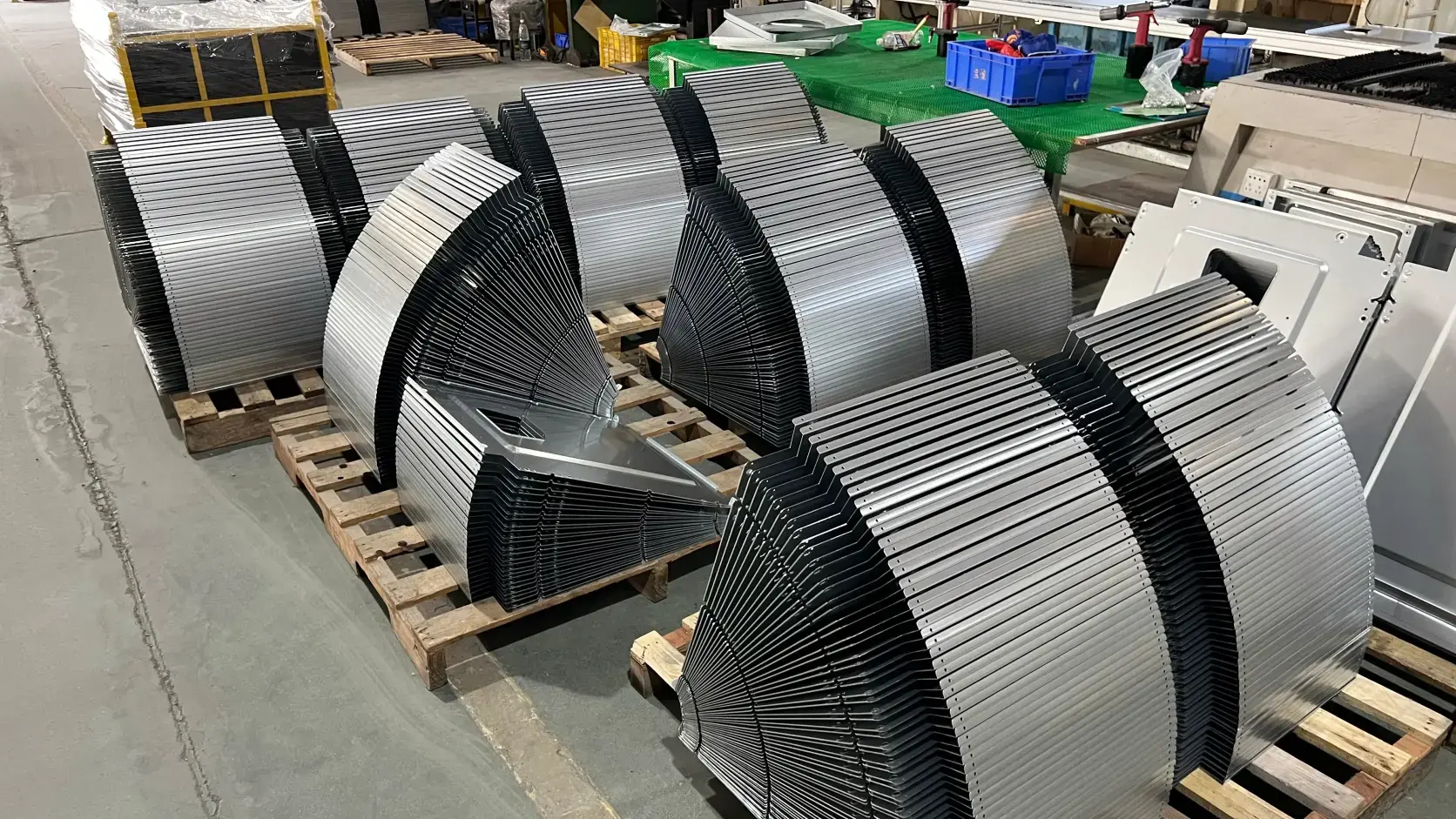
この画像は、板金加工で一般的に使用される様々な非標準特殊合金サンプルを示しており、材料間の外観の違いを表しています。.
一般的な合金ファミリー内であっても、非標準の呼称は該当します。. Requesting 304L instead of 304, or 6061-T651 instead of 6061-T6, introduces sourcing variables that affect procurement timelines.
カスタム厚みと公差
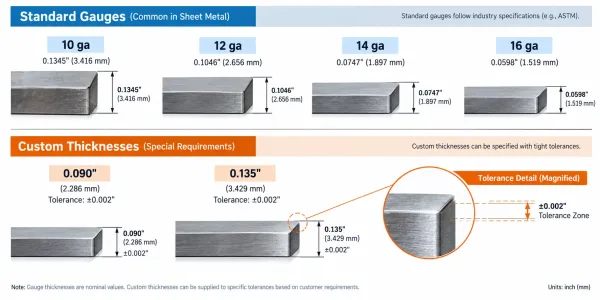
この図は、標準ゲージ厚みとカスタム厚み要件の違いを示しており、公差仕様が強調されています。.
板金素材は標準ゲージ単位で供給されます — 10 ga、12 ga、14 ga、16 gaなど。. 090″や0.135″など、標準ゲージに一致しない厚みを指定する場合、カスタム圧延または精密スリット材料を要求することになります。. これらは特別なミルオーダーまたは二次加工を必要とし、どちらもリードタイムを延長します。.
標準より厳しい厚み公差は問題をさらに複雑にします。鋼板の標準商業公差はASTM A568またはEN 10051で定義されています。. 図面が標準の±0.005″ではなく±0.002″を要求する場合、材料は精密ミルから注文するか、標準在庫から選別する必要があるかもしれません — どちらのアプローチも時間を追加します。.
特定の調質と状態
アルミニウムの調質(T0、T3、T4、T6、T651)および鋼の状態(焼鈍、正常化、焼入れ、焼戻し)は、材料の入手可能性と加工要件の両方に影響します。. T6アルミニウムは広く在庫されていますが、T3やT4調質はあまり一般的ではなく、ミルオーダーが必要な場合があります。.
鋼の場合、特定の硬度範囲を指定すると — 例えば HRC 28-32 for 4140 — サプライヤーが絞られます。熱処理された材料は追加の加工ステップと認証を必要とし、それぞれが調達に数日から数週間を追加します。.
認証およびコンプライアンス要件
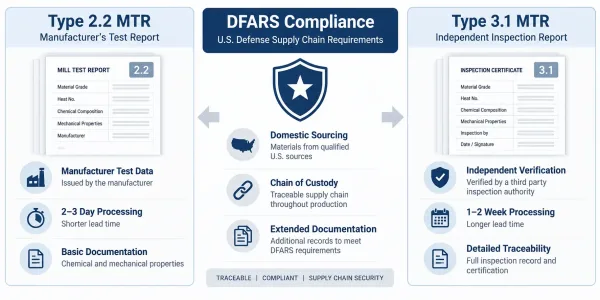
この図は、異なる認証文書タイプを比較し、Type 2.2とType 3.1ミルテストレポートの違いを強調しています。.
認証要件は、リードタイム延長の最も見落とされがちな要因の一つです。. EN 10204 Type 3.1に準拠したミルテストレポート(MTR)は、ミルでの処理時間を追加します。DFARSコンプライアンスは、国内または承認された外国ミルへの調達を制限します。NADCAP認定はサプライヤープールをさらに狭めます。.
これらの要件は材料自体を変えるものではありません — 材料の調達、文書化、検証の方法を変えるものです。. 標準MTR付きの304ステンレス鋼板は3日で入手できるかもしれません。. Type 3.1証明書とDFARSコンプライアンス声明付きの同じ鋼板は3週間かかるかもしれません。.
特殊材料要件がリードタイムを延長する理由
特殊材料要件は4つの主要なメカニズムを通じてリードタイムを延長します:限られたサプライヤーの可用性、最小注文数量、認証処理、および検査要件。. 各メカニズムは独立して時間を追加します;組み合わさると、調達タイムラインを倍増させる可能性があります。.
これらのメカニズムを理解することで、設計プロセスの早い段階でトレードオフを評価できます — 変更がまだ安価な段階で。.
特殊材料の限られたサプライヤープール
標準材料には広範な流通ネットワークがあります。ファブリケーターは標準ゲージの304ステンレス鋼を数十の金属サービスセンターから調達でき、多くの場合当日または翌日入手可能です。.
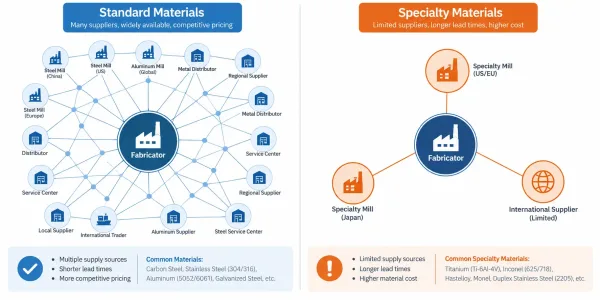
この図は、多くのサプライヤーを持つ標準材料と、限られた調達オプションの特殊材料との間のサプライヤー可用性の違いを示しています。.
Specialty materials have narrower supply chains. Inconel, titanium, and specialty stainless grades may be available from only two or three domestic distributors, or may need to be sourced directly from a mill. International sourcing adds customs and logistics time. When a material has fewer suppliers, each supplier has more leverage on lead time — and fewer alternatives exist when one supplier cannot deliver.
Minimum Order Quantities and Mill Lead Times
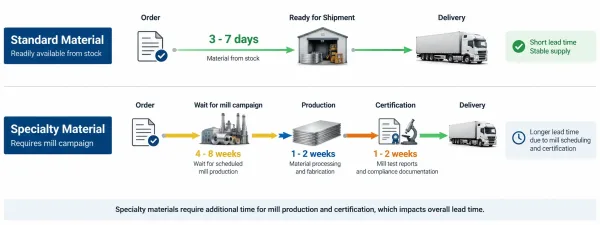
This timeline illustrates how mill production campaigns and minimum order quantities create extended lead times for specialty materials.
Mills produce specialty materials in campaigns, not continuous runs. A mill may not roll a particular alloy or thickness until a minimum order quantity is reached — often several thousand pounds. If your order is smaller than the mill’s minimum, your material waits until a production campaign is scheduled.
This “wait for mill run” is one of the most common causes of extended lead times for specialty materials. A standard steel sheet may be available from distributor stock in days. A custom-rolled specialty alloy may wait four to eight weeks for a mill run.
Certification and Documentation Processing
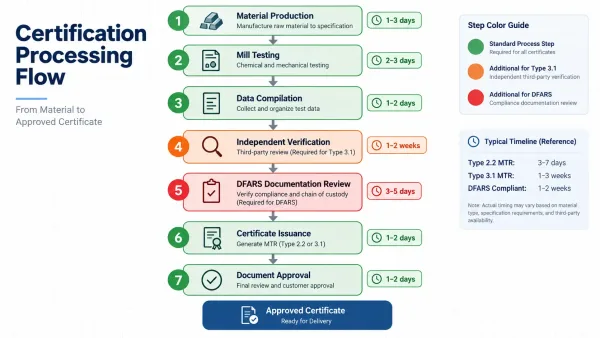
This flowchart shows the sequential steps in certification processing, from material testing through document compilation and issuance.
Mill certifications require time at multiple stages. The mill must test the material, compile the data, and issue the certificate. If you require EN 10204 Type 3.1 certification, the mill must perform independent verification testing. DFARS compliance requires documented chain of custody from melt to finished product.
Each certification layer adds processing time. A standard mill test report (Type 2.2) may add two to three days. A Type 3.1 certificate may add one to two weeks. DFARS compliance documentation may add another week for mills that do not routinely track this information.
Inspection and Testing Requirements
Special material requirements often include inspection protocols — chemical analysis verification, mechanical testing, ultrasonic inspection, or dimensional verification of thickness tolerances. These tests require time, equipment, and sometimes third-party laboratory involvement.
When inspection requirements are specified on the purchase order, the material cannot ship until inspection is complete and documentation is approved. This inspection cycle can add two to five business days to the procurement timeline, and longer if third-party testing is required.
Typical Lead Time Extensions for Special Requirements
Lead time extensions vary by requirement type and material. The following ranges reflect typical scenarios for sheet metal fabrication in North American markets.
Standard vs. Special Material Lead Times
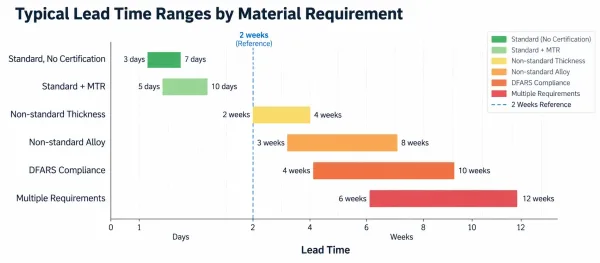
This bar chart visualizes the typical lead time ranges for different material requirement types, from standard materials to complex special requirements.
| Requirement Type | Typical Lead Time | Extension Over Standard |
|---|---|---|
| Standard grade, standard gauge, no certification | 3-7 business days | Baseline |
| Standard grade, standard gauge, MTR required | 5-10 business days | +2-3 days |
| Non-standard thickness or tolerance | 2-4 weeks | +1-3 weeks |
| Non-standard alloy or grade | 3-8 weeks | +2-7 weeks |
| DFARS or specialty compliance | 4-10 weeks | +3-9 weeks |
| Combination of multiple special requirements | 6-12 weeks | +5-11 weeks |
These ranges assume North American sourcing. International sourcing from Asian or European mills adds two to four weeks for shipping and customs.
Range of Extensions by Requirement Type
The extensions above are additive when requirements are combined. A non-standard alloy with DFARS compliance and tight tolerances may require 8-12 weeks — not because each requirement adds its maximum, but because they compound through the procurement chain.
Prototype quantities (under 100 pieces) typically experience longer per-unit lead times than production quantities, because small orders cannot justify dedicated mill campaigns. Production quantities (500+ pieces) may have shorter per-unit lead times but longer total procurement cycles due to the time required to schedule and execute mill runs.
How to Specify Special Material Requirements in RFQs
Clear specification at the RFQ stage is the most effective way to manage lead time expectations. Ambiguous or incomplete material requirements lead to clarification cycles that add days to the quoting process and weeks to the production schedule.
Key Information to Include in RFQs
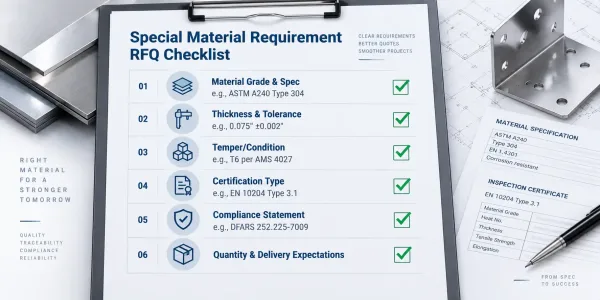
This checklist infographic summarizes the essential information buyers should include when specifying special material requirements in their RFQs.
When your material requirement includes any of the following, state it explicitly in your RFQ:
- Material grade and specification number (e.g., “ASTM A240 Type 304” not just “stainless steel”)
- Thickness and tolerance (e.g., “0.075” ±0.002″” not “14 ga”)
- Temper or condition (e.g., “T6 per AMS 4027” not just “aluminum”)
- Certification requirements (e.g., “EN 10204 Type 3.1 MTR required”)
- Compliance statements (e.g., “DFARS 252.225-7009 compliant”)
- Quantity and delivery expectations (to allow realistic scheduling)
The more complete your specification, the fewer clarification rounds your supplier needs — and the faster you receive an accurate quote with a realistic lead time.
Common Specification Pitfalls
Several specification patterns consistently cause delays:
Vague material callouts. “Stainless steel” without a grade, or “aluminum” without an alloy, forces the fabricator to ask for clarification. This adds one to three days to the quoting cycle.
Underspecified certifications. “Mill cert required” does not specify which type. Type 2.2 and Type 3.1 certificates have very different lead time implications. Specifying the exact certification type prevents misunderstandings.
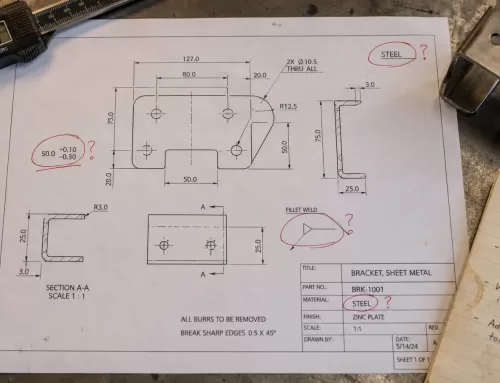
Conflicting requirements. Specifying a material that cannot meet all stated requirements simultaneously — such as a temper that conflicts with a hardness range — creates confusion and requires engineering clarification.
Last-minute additions. Adding DFARS compliance or special certifications after the initial RFQ extends lead times because the fabricator must re-source material through compliant channels.
Evaluating Supply Risk for Special Requirements
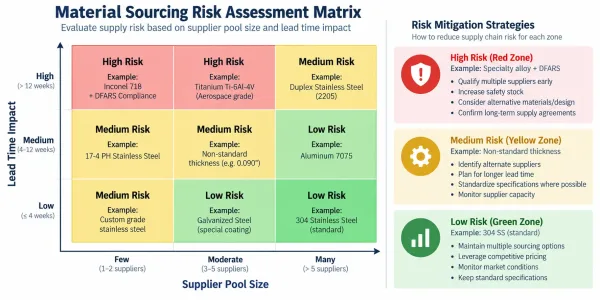
This risk assessment matrix helps buyers evaluate supply risk factors for special material requirements and identify appropriate mitigation strategies.
Not all special material requirements carry the same supply risk. Evaluating risk early helps you make informed decisions about material selection and project scheduling.
Supplier Capability Assessment
Before committing to a special material requirement, evaluate:
- Supplier pool size. How many domestic mills or distributors stock this material? Fewer than three suppliers indicates high supply risk.
- Mill schedule alignment. Does the mill have a scheduled production run for this material in the next 60-90 days? If not, your order may wait for the next campaign.
- Certification availability. Can your supplier provide the required certification type? Some mills do not offer Type 3.1 certificates for all products.
- Compliance documentation. For DFARS or other compliance requirements, does your supplier have documented chain of custody from melt to finished product?
Risk Mitigation Strategies
Several strategies can reduce supply risk for special material requirements:
Long-term agreements. If you anticipate ongoing need for a specialty material, a blanket purchase order or long-term agreement gives your supplier scheduling certainty and may secure priority allocation.
Dual sourcing. Qualifying two suppliers for the same material reduces single-point-of-failure risk. This is especially valuable for DFARS-compliant materials where supply chains are constrained.
Specification flexibility. Where possible, specify a range of acceptable materials rather than a single alloy. For example, “304 or 304L stainless steel” gives your supplier more sourcing options than “304 only.”
Advance planning. For project-critical materials, placing orders 8-12 weeks before production need dates provides buffer for mill scheduling and certification processing.
Strategies to Manage Special Material Lead Times
Special material requirements are sometimes unavoidable — the application demands a specific alloy, thickness, or certification. When that is the case, several strategies can help manage the extended lead time.
Early Engagement with Suppliers
The most effective strategy is early engagement. Contact your fabricator during the design phase, before drawings are finalized. A fabricator can advise on material availability, suggest alternatives that meet functional requirements with shorter lead times, and schedule material procurement to align with your production timeline.
Early engagement also allows the fabricator to place material orders before the formal RFQ, reducing the time between order placement and production start.
Alternative Material Considerations
When lead time is critical, evaluate whether a standard material can meet your functional requirements. Common substitutions include:
- 304L instead of 304 (slightly different chemistry, often more available)
- 5052-H32 instead of 6061-T6 (different strength, similar corrosion resistance)
- ASTM A1008 instead of A1011 (different steel grade, often interchangeable for non-structural applications)
These substitutions require engineering review to confirm functional equivalence. Your fabricator can advise on which substitutions are viable for your application.
Buffer Time Planning
For projects with fixed delivery dates, build procurement buffer into your schedule. A general guideline:
- Standard materials: Add 3-5 business days beyond quoted lead time
- Non-standard thicknesses: Add 1-2 weeks
- Non-standard alloys: Add 2-4 weeks
- DFARS or compliance materials: Add 3-6 weeks
This buffer accounts for sourcing delays, certification processing, and inspection cycles. It also provides margin for the unexpected — a mill delay, a shipping problem, or a last-minute specification change.
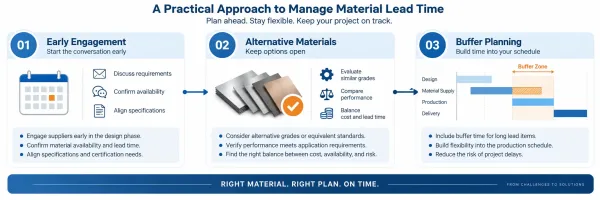
This infographic summarizes the three main strategies for managing extended lead times: early engagement, alternative materials, and buffer planning.